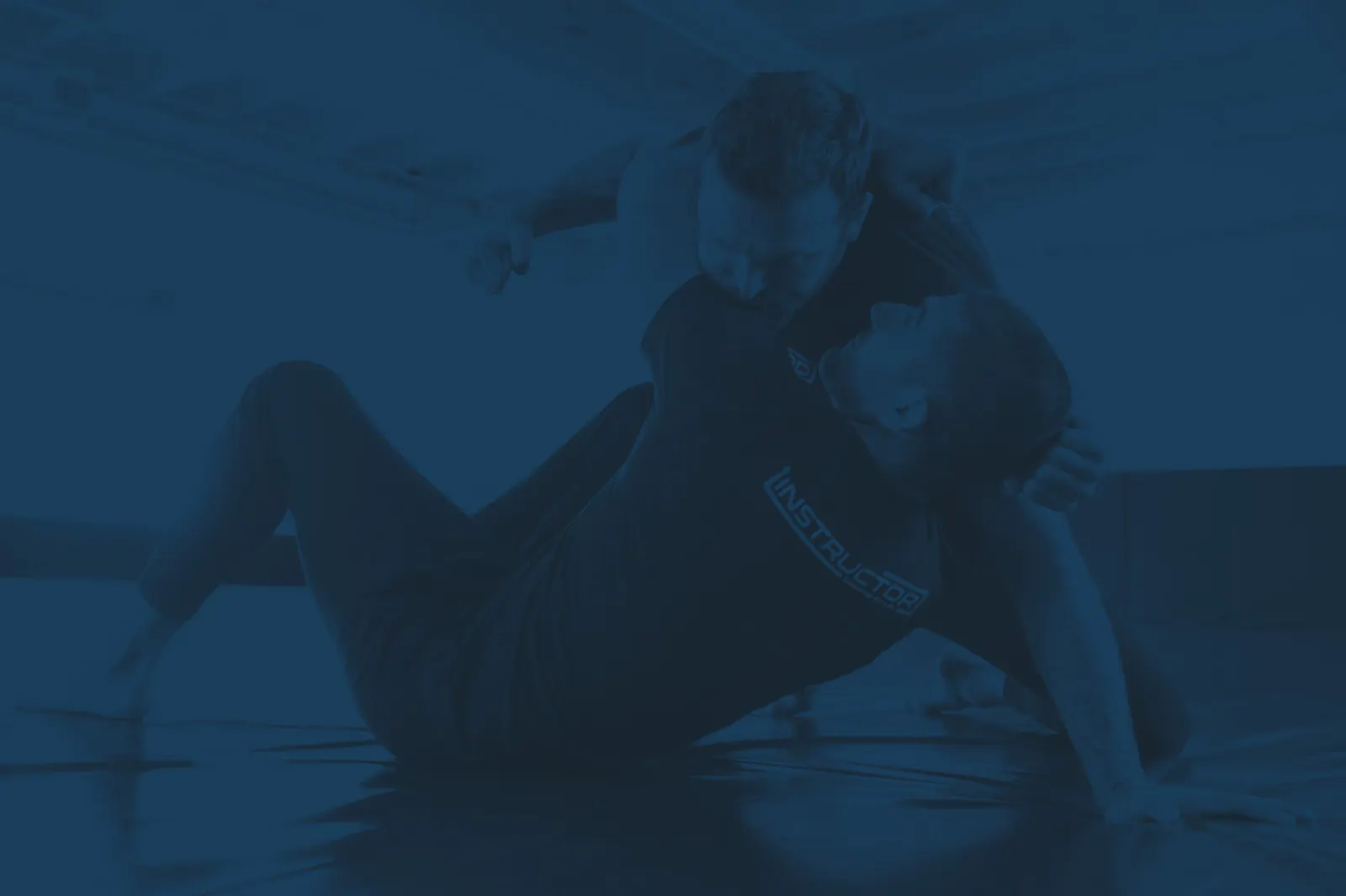
Escape Power
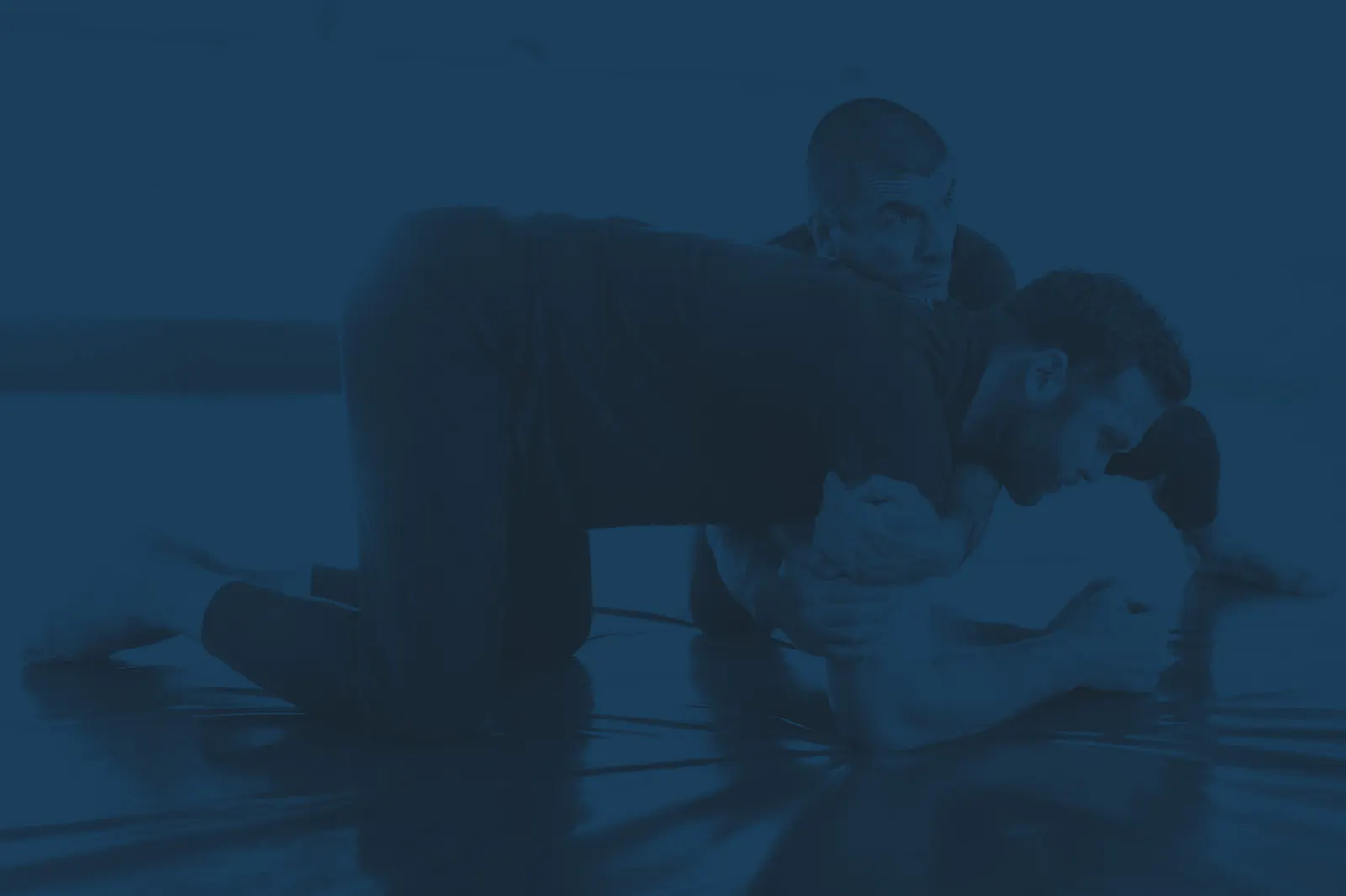
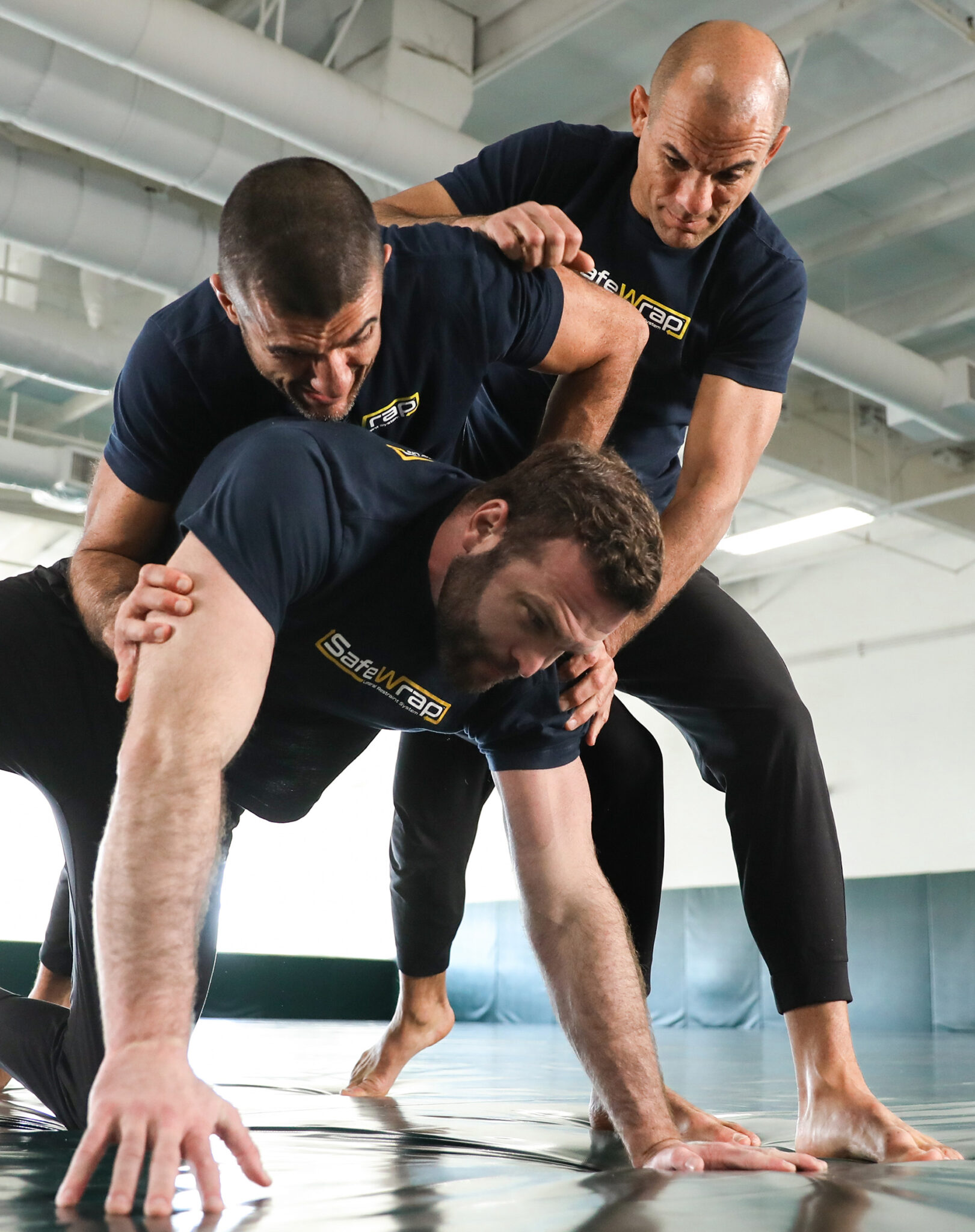
From the prone position, a person can push off the ground with their arms, knees, and feet. That can lead to standing up, twisting away, or an uncontrolled force-against-force struggle.
For professionals in healthcare and public safety
Safe physical intervention, without losing contact.
Sometimes a situation escalates to the point where talking alone is no longer enough. Someone may pose a danger to themselves, to others, or to their surroundings.
At such moments, SafeWrap® Nederland helps SafeWrap-trained professionals intervene physically in a way that is safe, controlled, and careful-prioritizing free breathing, avoiding pressure on the chest and diaphragm, maintaining contact, and continuing to de-escalate.
For healthcare teams, law enforcement, security personnel, and other professionals who may face serious escalation.
The System
SafeWrap is a practical, integrated system for physical crisis intervention. Its components include Solo Survival, for situations in which a professional is temporarily on their own; SafeDown, for a coordinated and safe transition to the ground; and SafeSwitch, for stepping in and taking over a position or role in a controlled way.
SafeWrap was developed with safety as its starting point: for the person being restrained, for the professionals involved, and for the surroundings. The system is designed to keep pain, injury, and traumatic impact during physical intervention to a minimum. That principle informs every element: the choice of position, the division of roles, communication, observation, and the gradual release.
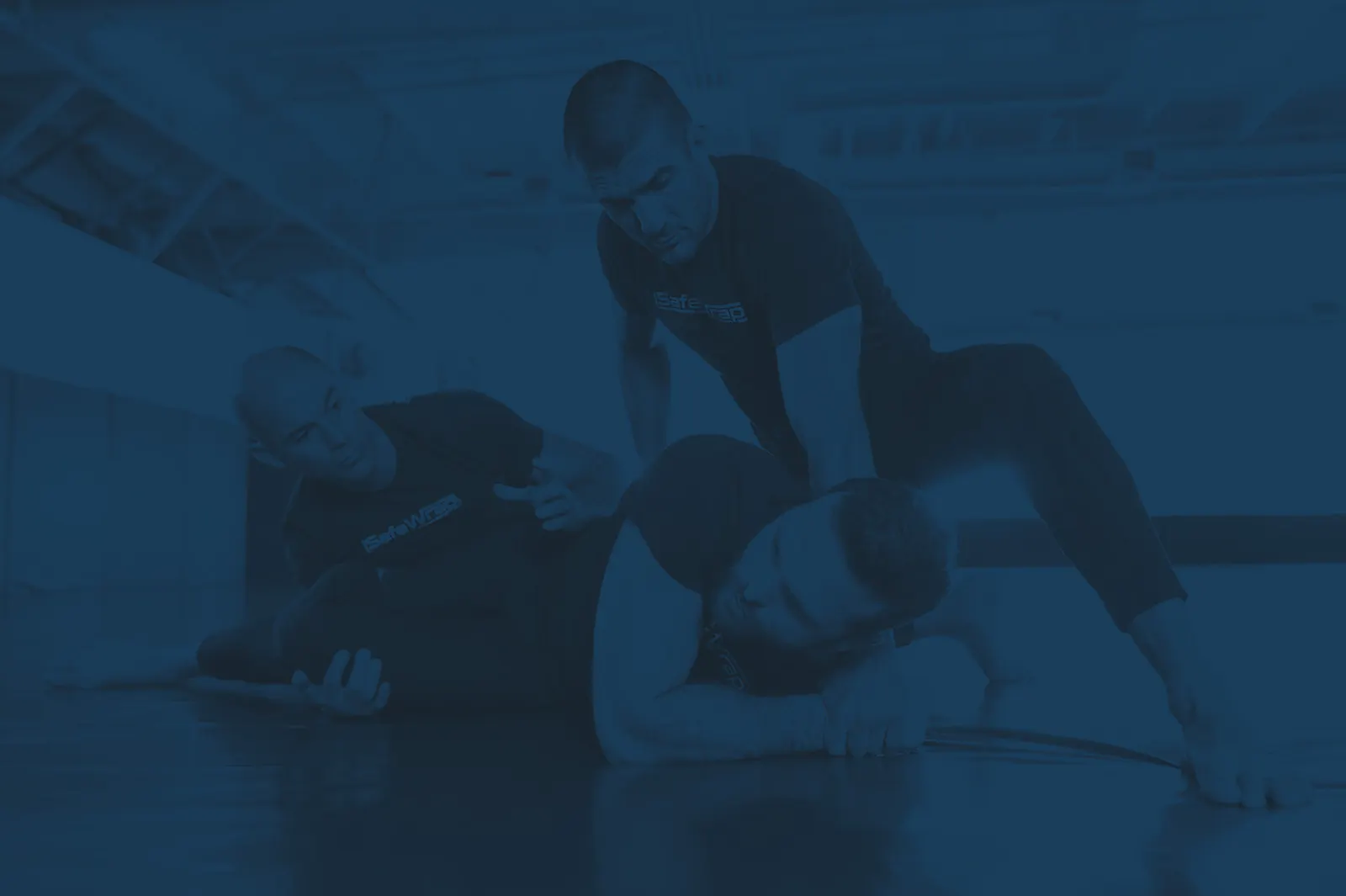
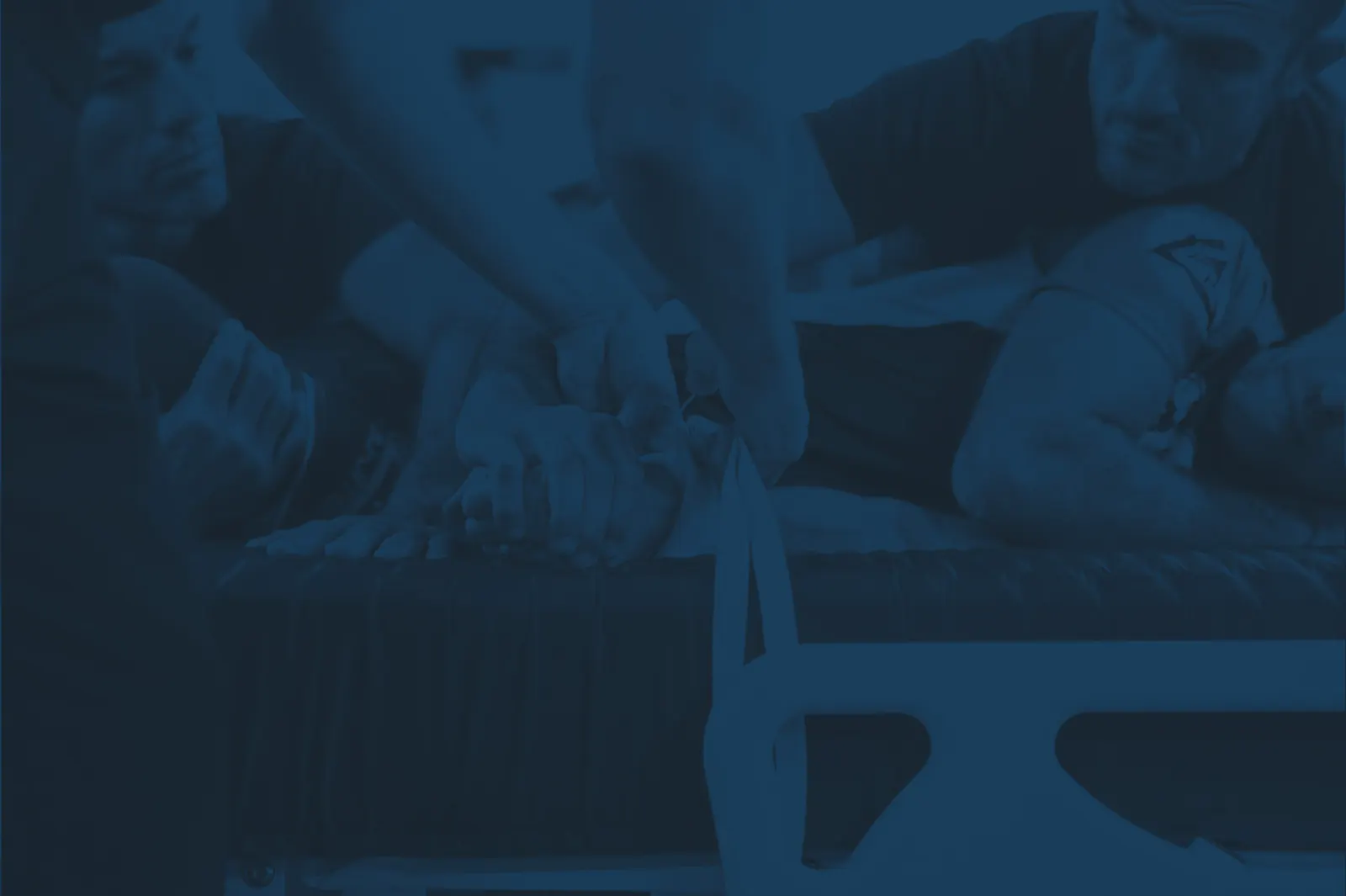
In team-based physical intervention, SafeWrap is built around the lateral position-the recovery position familiar from first aid. This choice is significant both medically and tactically. The positioning is designed to avoid pressure on the chest and diaphragm and to keep the face, breathing, and other physical signs in full view. That supports contact and observation and leaves room for any care that is needed. At the same time, lying on their side limits the person's ability to push off the ground with their whole body or to twist away forcefully.
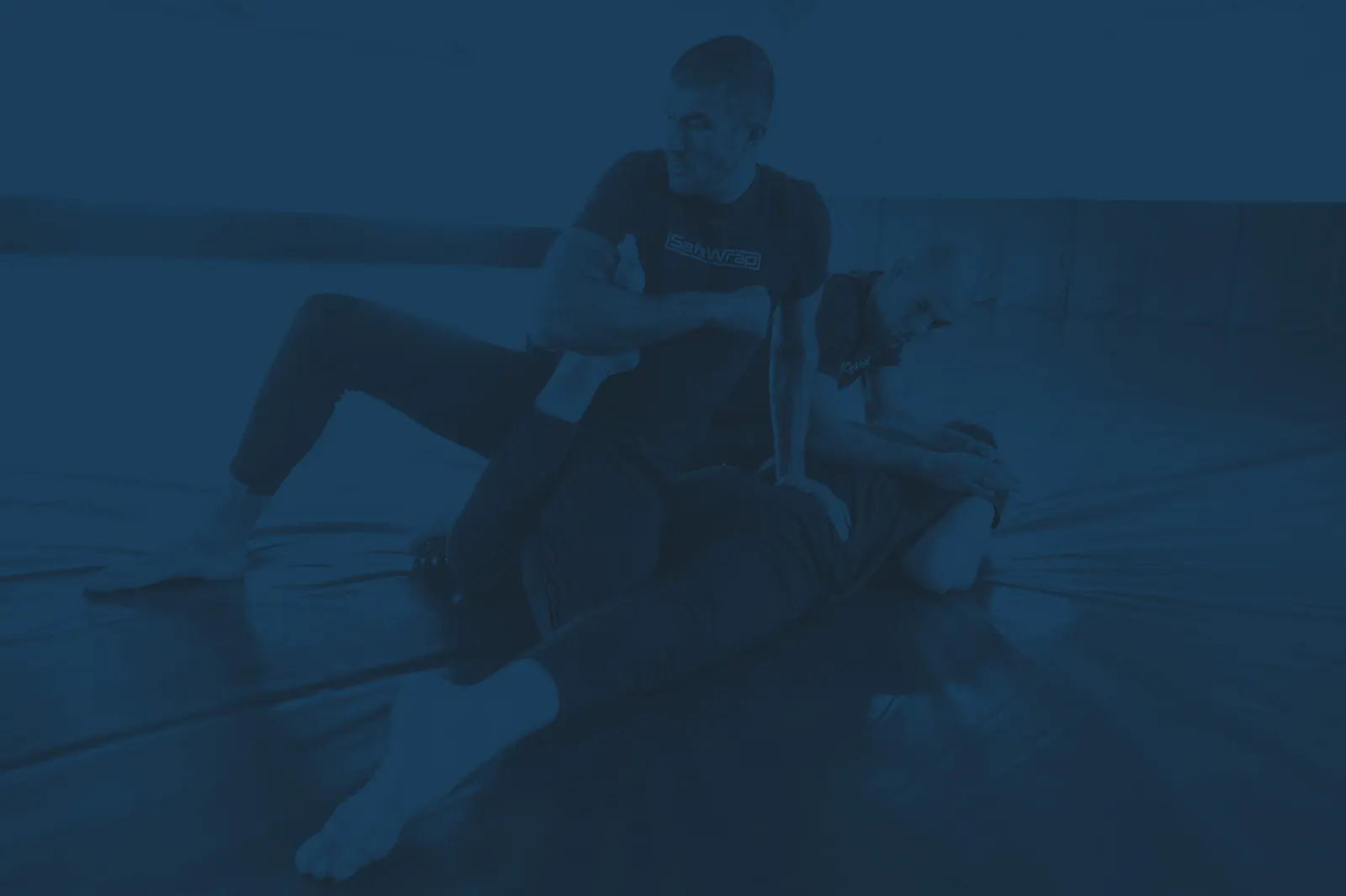
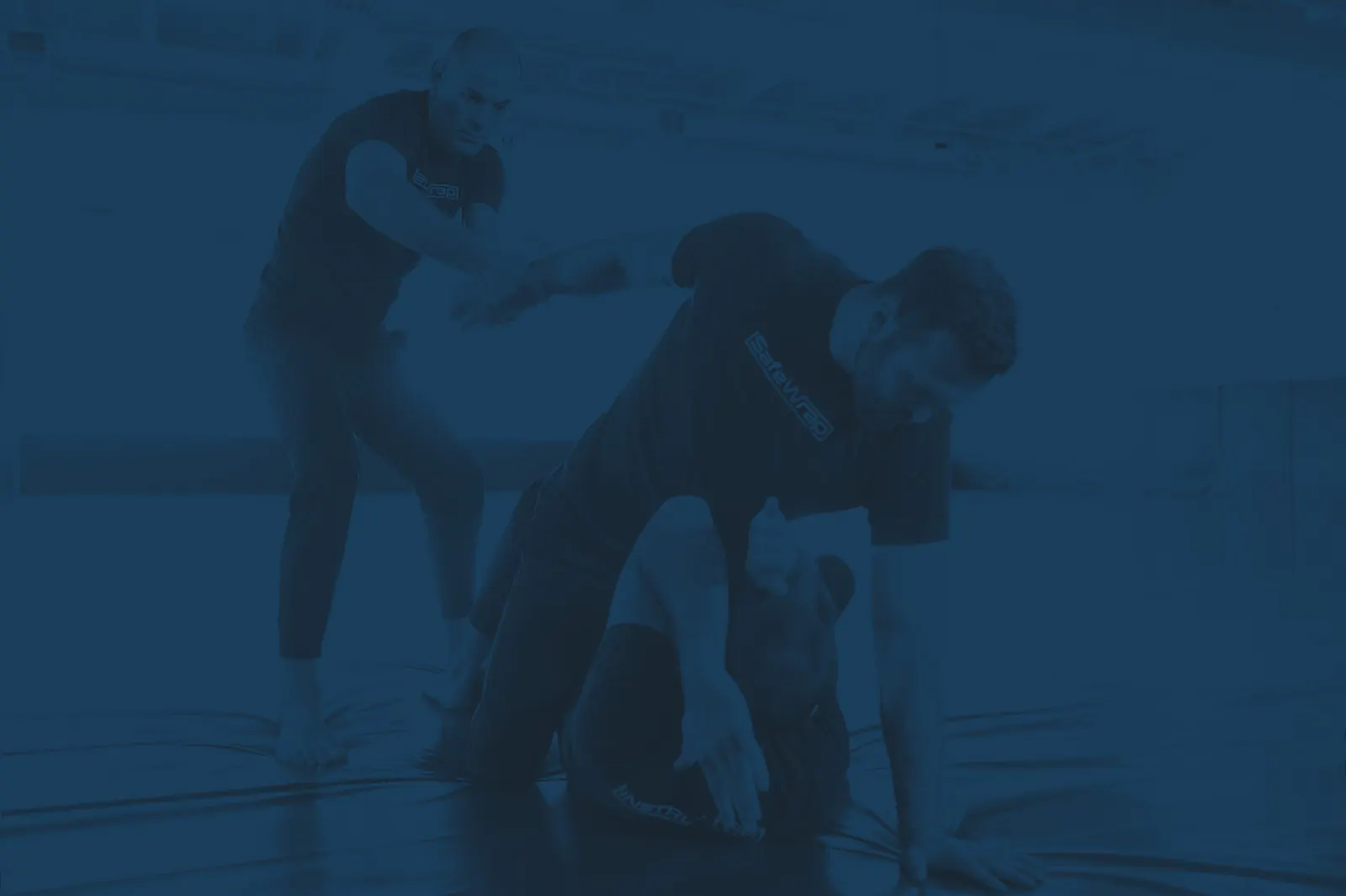
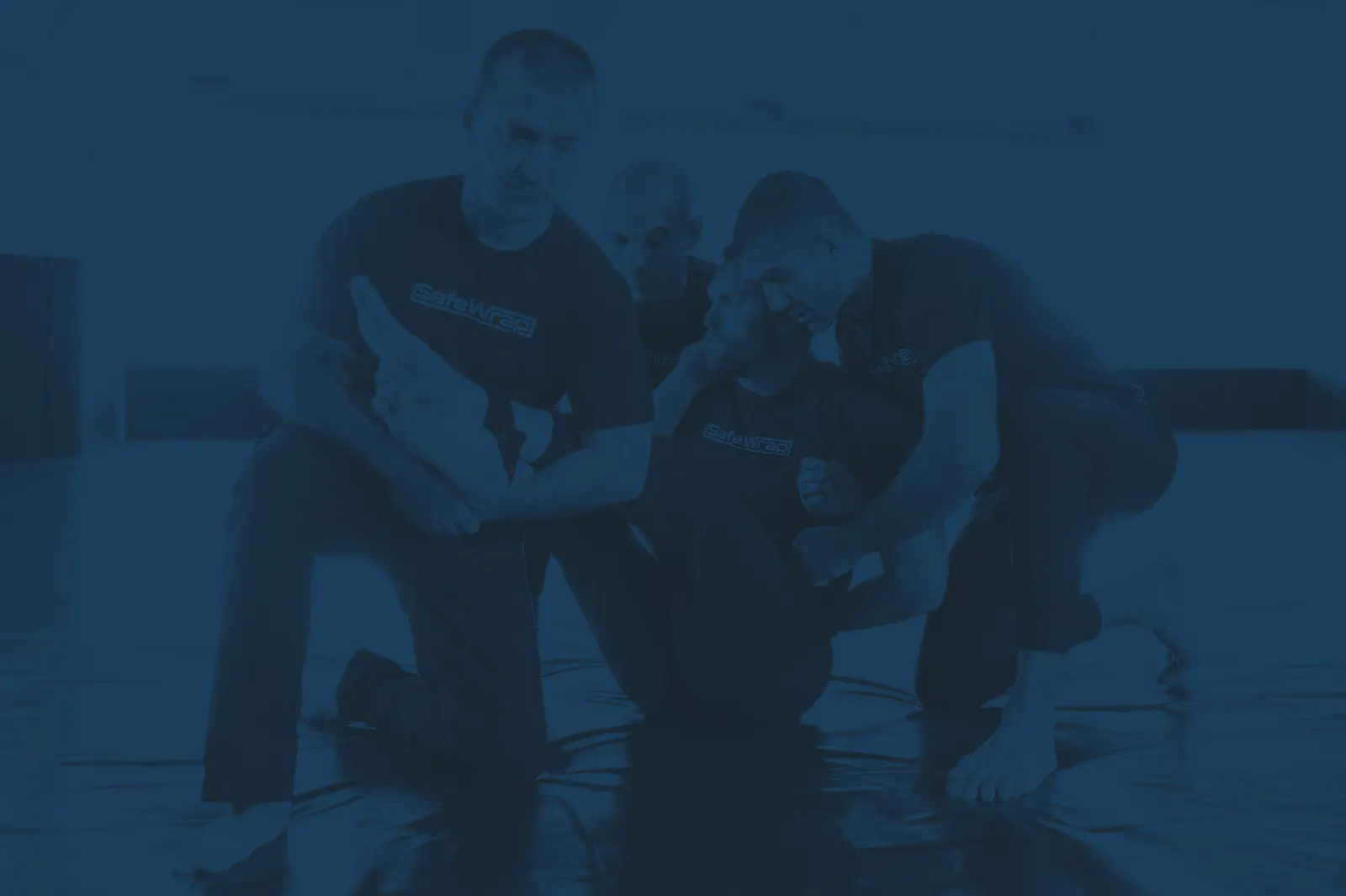
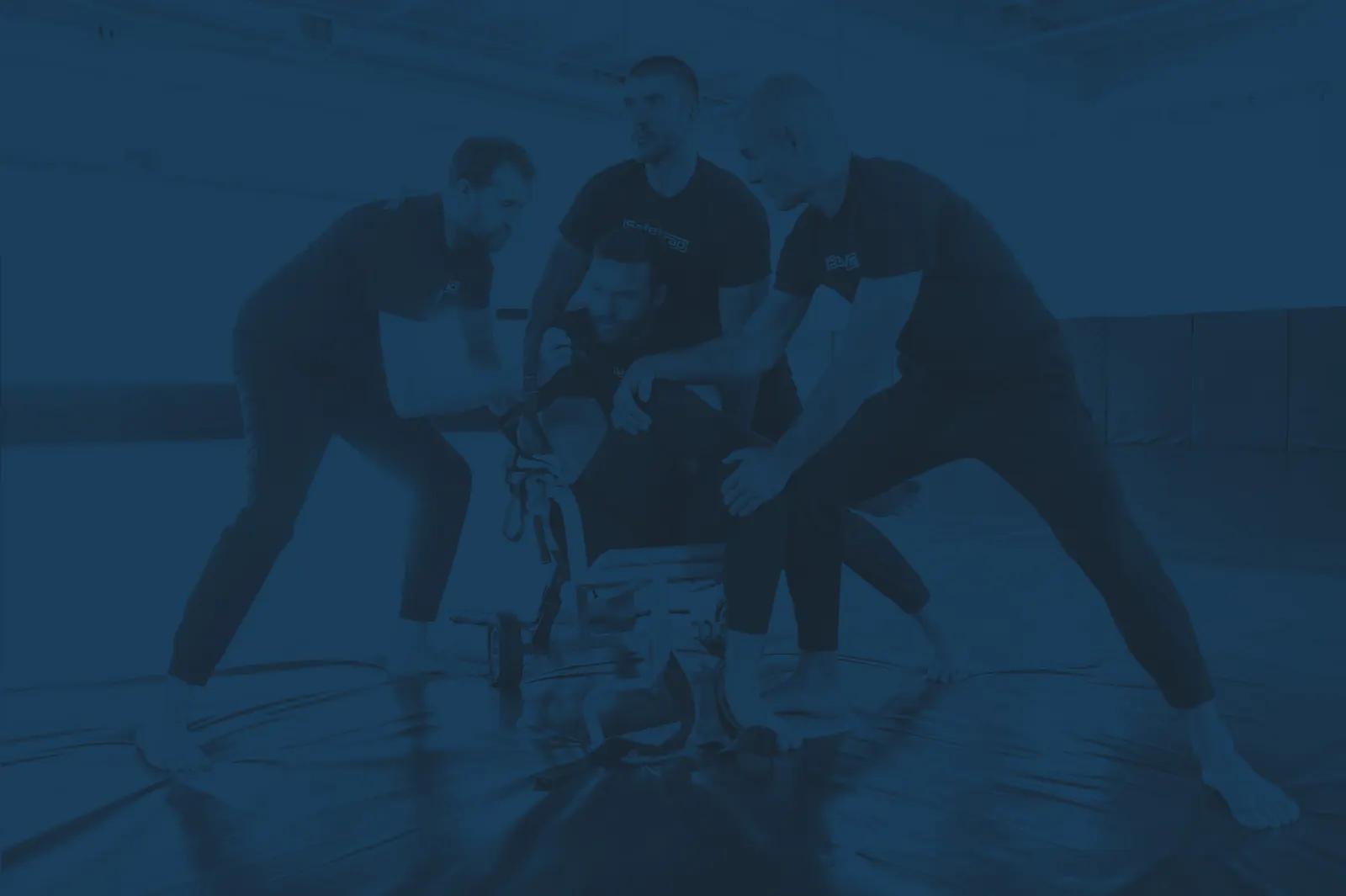
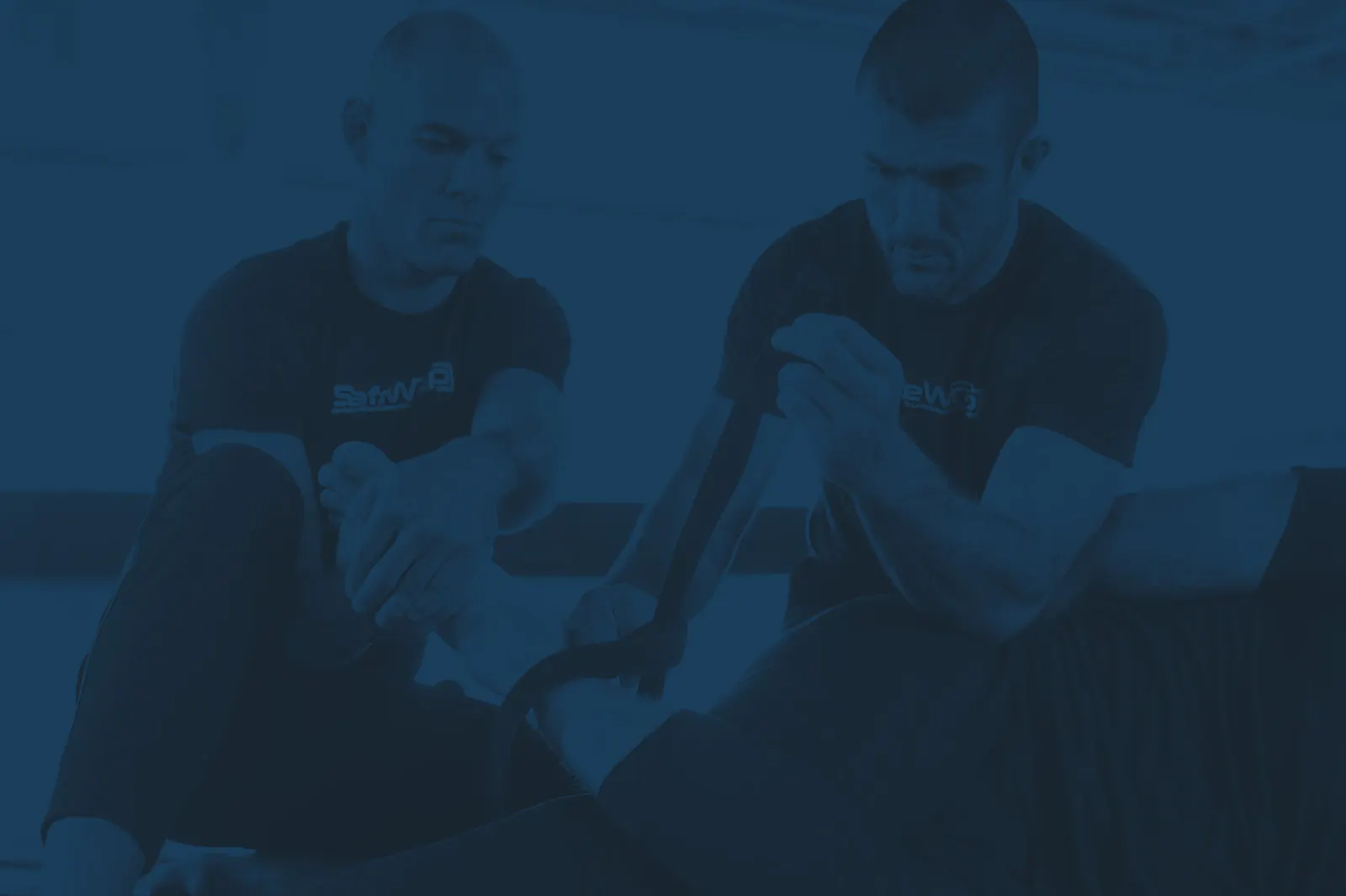
Within this position, two SafeWrap-trained professionals manage physical control from complementary roles: one controls the upper body, the other the lower body. By controlling the arms and legs crosswise-combining body mechanics, positioning, and close coordination-they limit the person's freedom of movement and are able to physically restrain them.
With SafeSwitch, professionals can switch positions in a controlled way, or a third professional can step in to relieve them, so that physical control, contact, and observation continue uninterrupted throughout the switch.
99.2%
Effective
129 of the 130 documented SafeWrap applications were rated Effective or Very Effective.
In 2025, the Institute for the Prevention of In-Custody Deaths (IPICD) asked for and was granted permission to independently review the first 130 documented field applications of SafeWrap, spread across 22 organizations, in order to evaluate how the system performed in real-world encounters. These were the results:
Source: IPICD, Selective Field Research Findings
On the applications studied:
“SafeWrap worked on everyone, regardless of their behavior.”
Dr. John Peters (Ph.D.)
President, IPICD
Download the Research Summary(English, PDF)Download the Executive Summary(English, PDF)
The Problem
The position in which a person is physically restrained has a direct effect on safety, situational awareness, and contact. In the prone position, the hands can end up out of sight or under the body. Freeing those hands can then be difficult and may provoke additional resistance, a physical struggle, or escalation. Concealed or hazardous objects may also go unnoticed for longer. At the same time, a person in the prone position can push off or twist with considerable force. Such movements are often hard to stop, which makes it more difficult to maintain a stable and safe position. That is why SafeWrap focuses on a controlled transition to the lateral position as soon as it is safe to do so.
The prone position is part of several existing approaches to physical intervention-which is exactly why a direct comparison with the lateral position is relevant. The comparison below shows which practical problems can arise in the prone position and how positioning within SafeWrap differs.
Escape Power
From the prone position, a person can push off the ground with their arms, knees, and feet. That can lead to standing up, twisting away, or an uncontrolled force-against-force struggle.
Hidden Hands
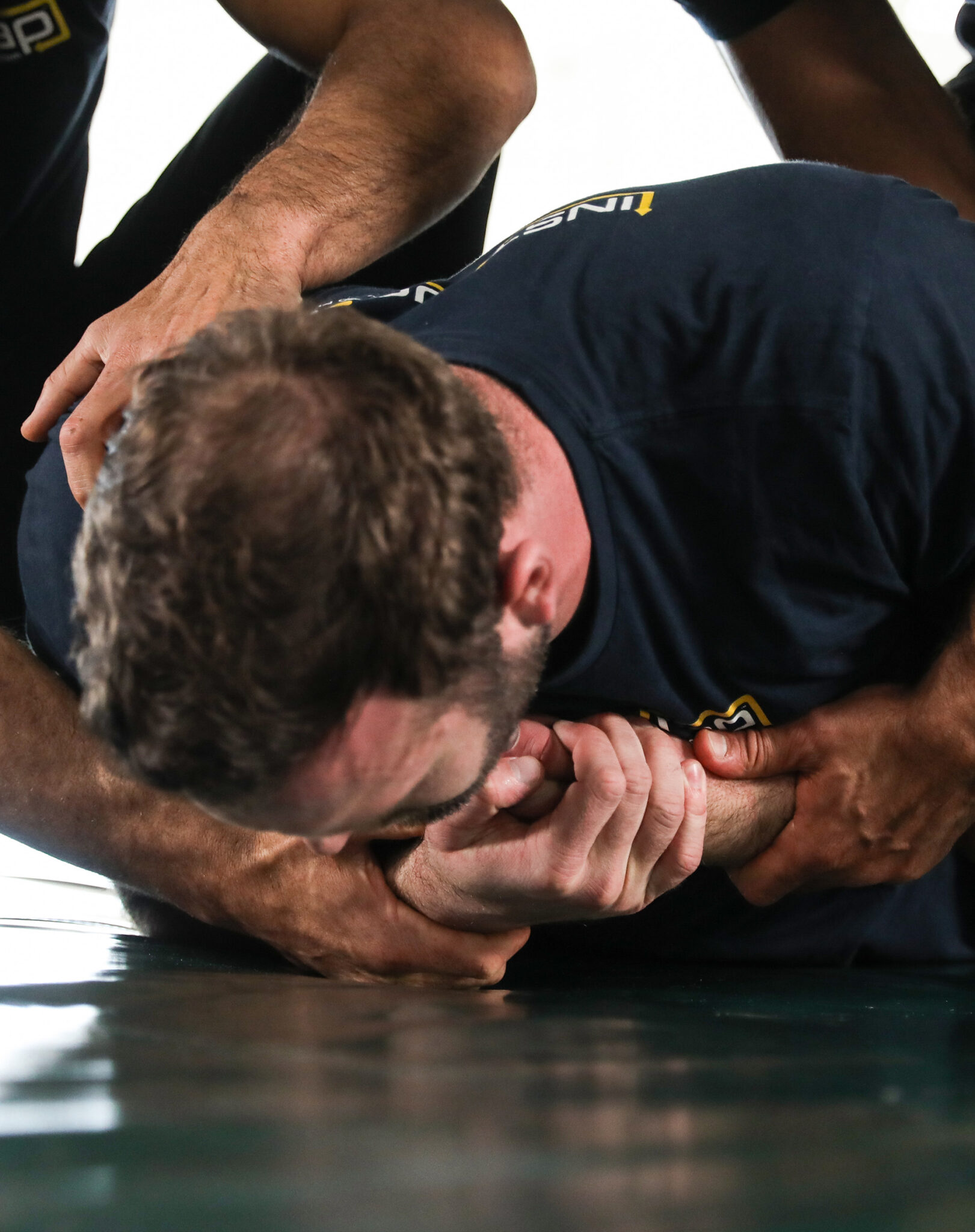
When the hands disappear under the body, the team can lose sight of what the person is doing with them. That hampers coordination and can make it unnecessarily difficult to bring the hands into view or free them.
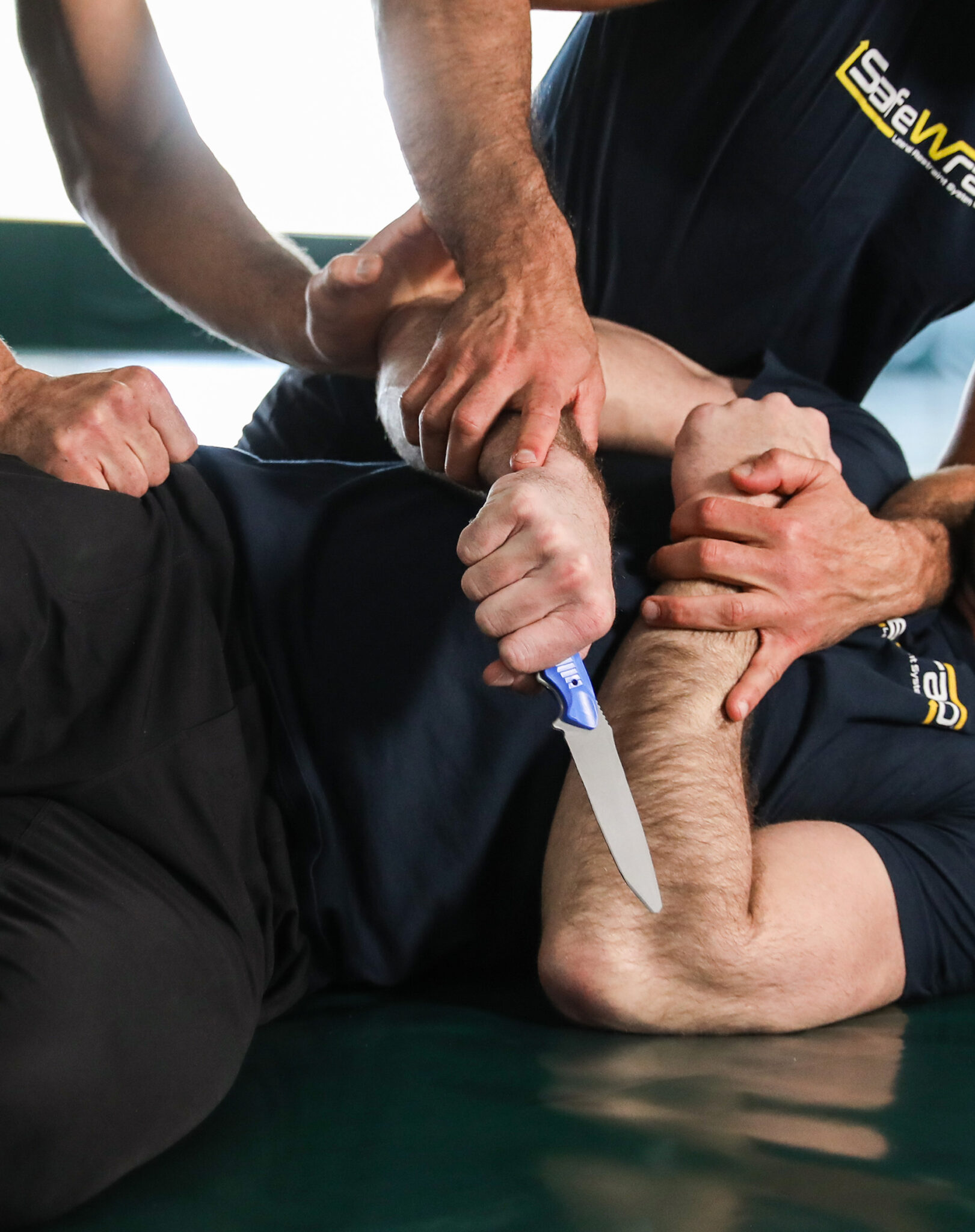
Access to Concealed Objects
When the hands are out of sight, a person may be able to reach a concealed weapon or other hazardous object in their clothing or around their waist before the team notices.
Six interconnected components of the system.
Fixed roles, clear positioning, and communication between them help professionals act in a coordinated way. Two trained professionals divide the tasks and support each other during the intervention. Calm positioning-without pain compliance, joint locks, or choke holds-helps limit improvisation and force-against-force struggles.
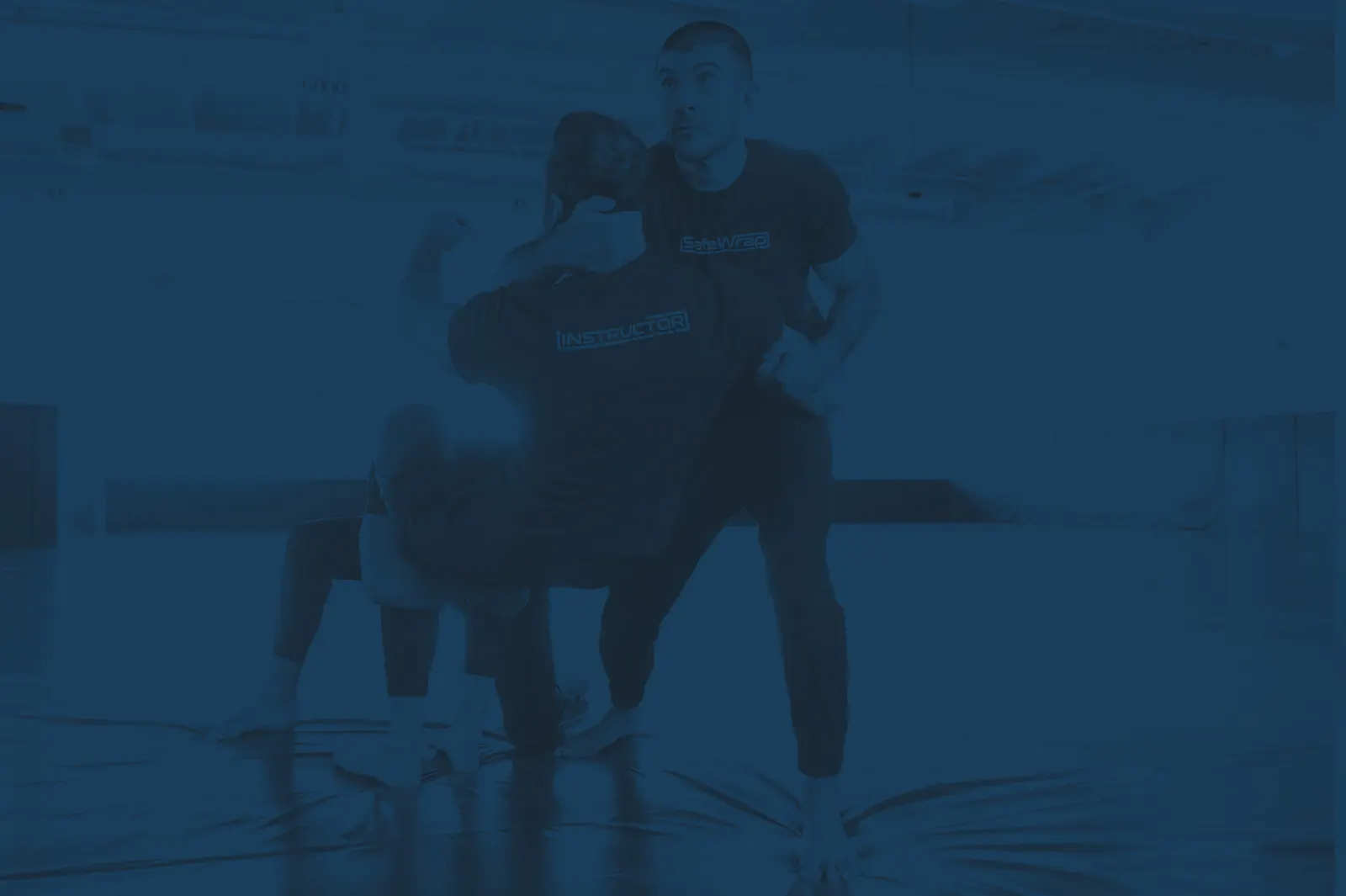
SafeDown provides a controlled transition to the ground, with the head supported. The descent is deliberate and controlled, keeping falls, twisting away, and uncontrolled movement to a minimum.
Free breathing, a clear view of physical signs, and limiting pain and injury are central. The hold is organized from the lateral position, with the emphasis on free breathing and avoiding pressure on the chest and diaphragm. Careful positioning helps keep unnecessary pressure, pain, and struggle to a minimum and supports observation of facial expression, posture, and other signs of medical distress.
De-escalation does not stop when physical intervention begins. The team maintains contact and narrates its actions-saying what is happening, why, and what the next step is. That increases predictability, can help limit traumatic impact, and supports a careful, gradual release of the physical hold as soon as it is safe to do so.
SafeWrap helps organize physical intervention in a way that leaves healthcare professionals room for assessment and any necessary medical care.
Solo Survival focuses on self-protection, creating distance, and buying time until colleagues can take over. Protecting the head and neck and maintaining or creating enough space are central. The aim is not to subdue or physically restrain someone single-handedly, but to limit injury as much as possible and enable the transition to coordinated team action.
Whenever it is safe and feasible, SafeWrap begins with verbal de-escalation to reduce tension and, where possible, avoid physical intervention.
For Organizations
Managing aggression, acute behavioral crises, and escalation is a demanding professional task. When existing systems and procedures turn out not to fully apply in a specific situation, or offer too little practical guidance, SafeWrap links de-escalation, contact, communication, and observation with positioning, team roles, physical control, and gradual release. That coherence strengthens the ability to act in practice and provides a concrete basis for professional confidence-in one's own actions and in those of the team. In this way, SafeWrap fills the practical gap between existing systems and improvising out of necessity.
That gap becomes visible in complex situations in which behavior and circumstances can change quickly, different risks converge, and professionals must weigh under pressure what is appropriate at that moment. This professional challenge can present itself in situations involving, for example:
SafeWrap is an integrated system with a shared core and context-specific applications and procedures. The practical question at hand and the work setting determine which of these come into play. In both healthcare and public safety settings, for example, the system leaves room for medical care and, where handcuffs are used, a shared procedure for Lateral Handcuffing™. Click Healthcare or Public Safety below to explore the system further.
Healthcare and Social Services
Including:
Public Safety and Law Enforcement
Including:
As tension rises, acute stress can affect perception, information processing, and action. Within a short span of time, perceiving, weighing options, coordinating, and acting all come together. It is precisely at such moments that tension and time pressure show in physical responses, attention, and information processing.
Acute Stress Response
An acute stress response can involve an elevated heart rate, faster breathing, and increased muscle tension.
Cognitive Narrowing
It can become harder to maintain situational awareness, process information, and carefully weigh alternatives.
Tunnel Vision and Auditory Exclusion
Visual and auditory information outside the primary focus may be registered less consciously, including changes in the surroundings and cues from colleagues.
Under acute pressure, there is less room to consciously weigh every step. Professionals then rely more heavily on an approach they have internalized beforehand through team training. That is why, within SafeWrap, controlled positioning, body mechanics, and coordinated team action are trained together: in motion, with varying responses, and under active resistance. This is not only about individual actions, but also about applying the underlying principles when events unfold differently than expected, and about adapting one's actions to what is actually happening.
SafeWrap aligns with four fundamental ethical principles. In healthcare, these are reflected in the Medical Treatment Contracts Act (WGBO), the Compulsory Mental Healthcare Act (Wvggz), the Care and Compulsion Act (Wzd), and the Youth Act (Jeugdwet). In the public safety domain, the system aligns with related principles, such as those in the Police Act 2012 (Politiewet 2012) and the Official Instructions on the use of force (Ambtsinstructie).
Proportionality
The nature, intensity, and duration of the intervention are proportionate to the current risk and the specific objective of the intervention.
Necessity
A less restrictive option takes precedence whenever one is available and sufficient.
Effectiveness
The chosen intervention must be capable of contributing to the safety or care objective for which it is carried out.
Safety
Professionals monitor the situation, physical signs, and changing risks, and adjust execution and release accordingly.
Within SafeWrap, self-protection, coordinated team action, dynamic de-escalation, observation, room for necessary care, and gradual release form one coherent whole. The sections below show, from different angles, what this means in practice for professionals and for the person being restrained.
Within SafeWrap, Solo Survival focuses on self-protection when a professional is temporarily on their own: protecting yourself, creating space where possible, calling for help, and buying time until help arrives.
In team-based interventions, SafeWrap works with complementary roles for two SafeWrap-trained professionals. One role focuses on positioning and control around the upper body, the other around the lower body. Brief, functional communication supports coordination between them.
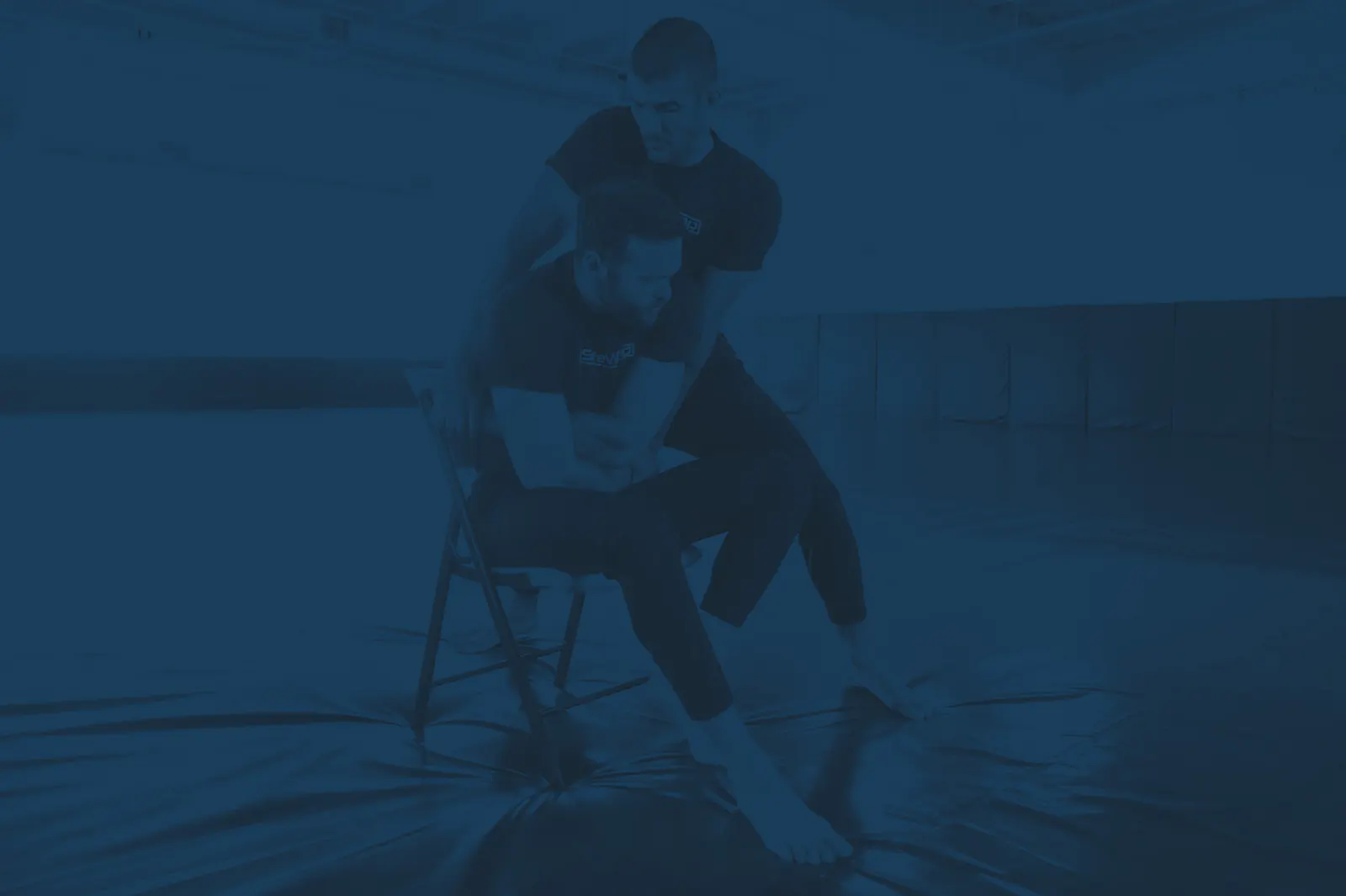
SafeDown provides a shared structure for a controlled transition from a standing position, with attention to direction, positioning, and support of the head and body.
De-escalation does not stop when physical intervention begins. Within SafeWrap, contact and brief, predictable explanations remain part of the intervention. The structure supports adjusting tone, pace, and the level of physical control to observable changes in tension, resistance, and contact.
The positioning within SafeWrap is designed to avoid pressure on the chest and diaphragm and to preserve room for free breathing.
In the lateral position, the face remains visible, and breathing, level of consciousness, and other observable physical signs can be monitored throughout the intervention.
Within SafeWrap, SafeSwitch provides a set structure for a controlled switch of position or role during physical intervention. That structure helps physical control, contact, and observation continue throughout the switch.
Gradual release is also part of the system. SafeWrap provides a structure for reducing physical control step by step. Taken together, the observations of behavior, breathing, physical signs, and changes in tension or resistance-along with the steps applied, the switches, and the release-provide a concrete picture of how the intervention unfolded. That information is relevant for further assessment, follow-up care, safety considerations, debriefing, and evaluation.
SafeWrap brings de-escalation, controlled physical intervention, maintaining contact, observation, and room for necessary care together in one trainable structure. In doing so, the system combines safety, careful execution, and human connection during physical intervention.
Elsewhere in the system: Room for Medical Care
For mental health institutions, SafeWrap thus offers a practical implementation structure that can contribute to the policy direction set out in the Dutch field standard on seclusion, Vrijheidsbeperking in de GGZ: veldnorm insluiting (Restriction of Liberty in Mental Health Care: Field Standard on Seclusion): preventing seclusion wherever possible and, where it cannot be prevented, limiting its duration and impact as much as possible.
For some healthcare settings-such as medical-psychiatric units (MPUs), ICUs, emergency departments, and acute and forensic psychiatry-the transition to four-point restraints is a relevant application within the SafeWrap system. From cross-control, SafeWrap supports a safe, controlled, step-by-step transition into position and into the restraint system when this is needed.
More than half of all healthcare and social services workers experience aggression from patients or those close to them. In some occupational groups, that share rises to nearly four in five.
Nearly 6 in 10
healthcare and social services workers
Nearly 4 in 5
social workers and residential and group care workers
In physical intervention with children, fear, trust, and contact matter alongside physical safety. This video looks at the application of SafeWrap with this vulnerable group.
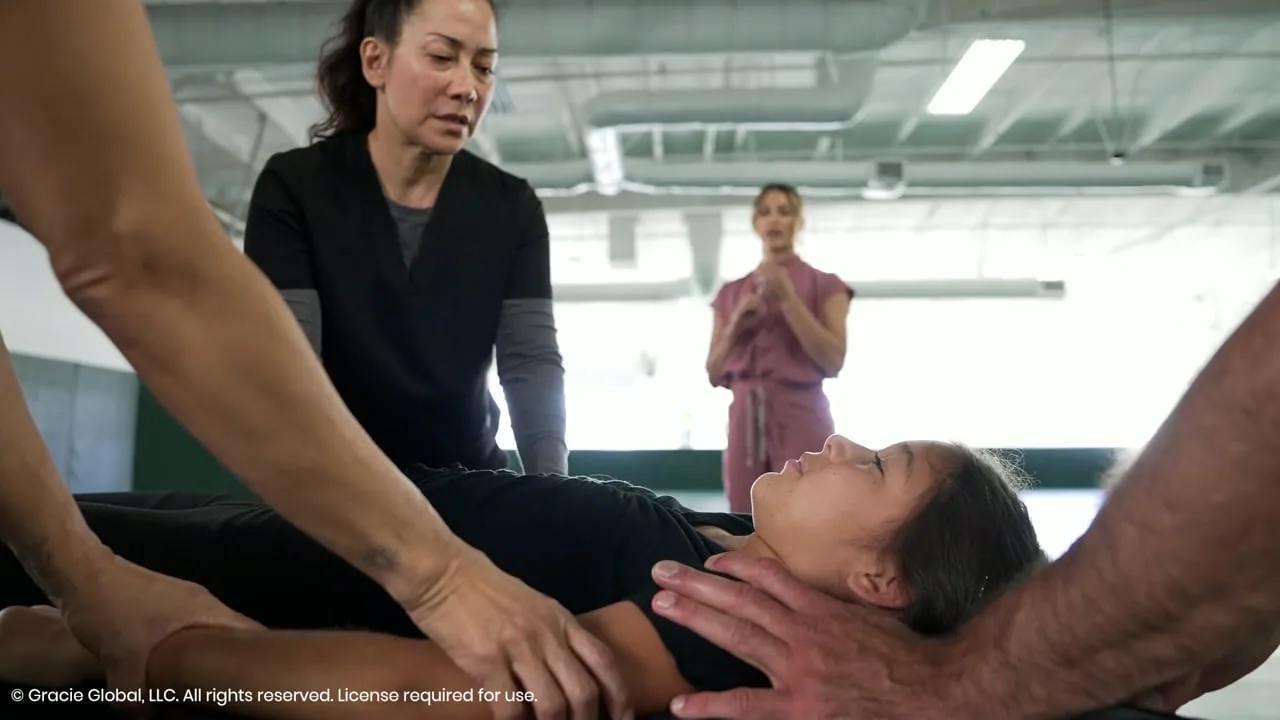
SafeWrap is a system that prioritizes de-escalation, in which contact, observation, and communication are part of the physical intervention. In training, positioning, team roles, and gradual release are taught and practiced together.
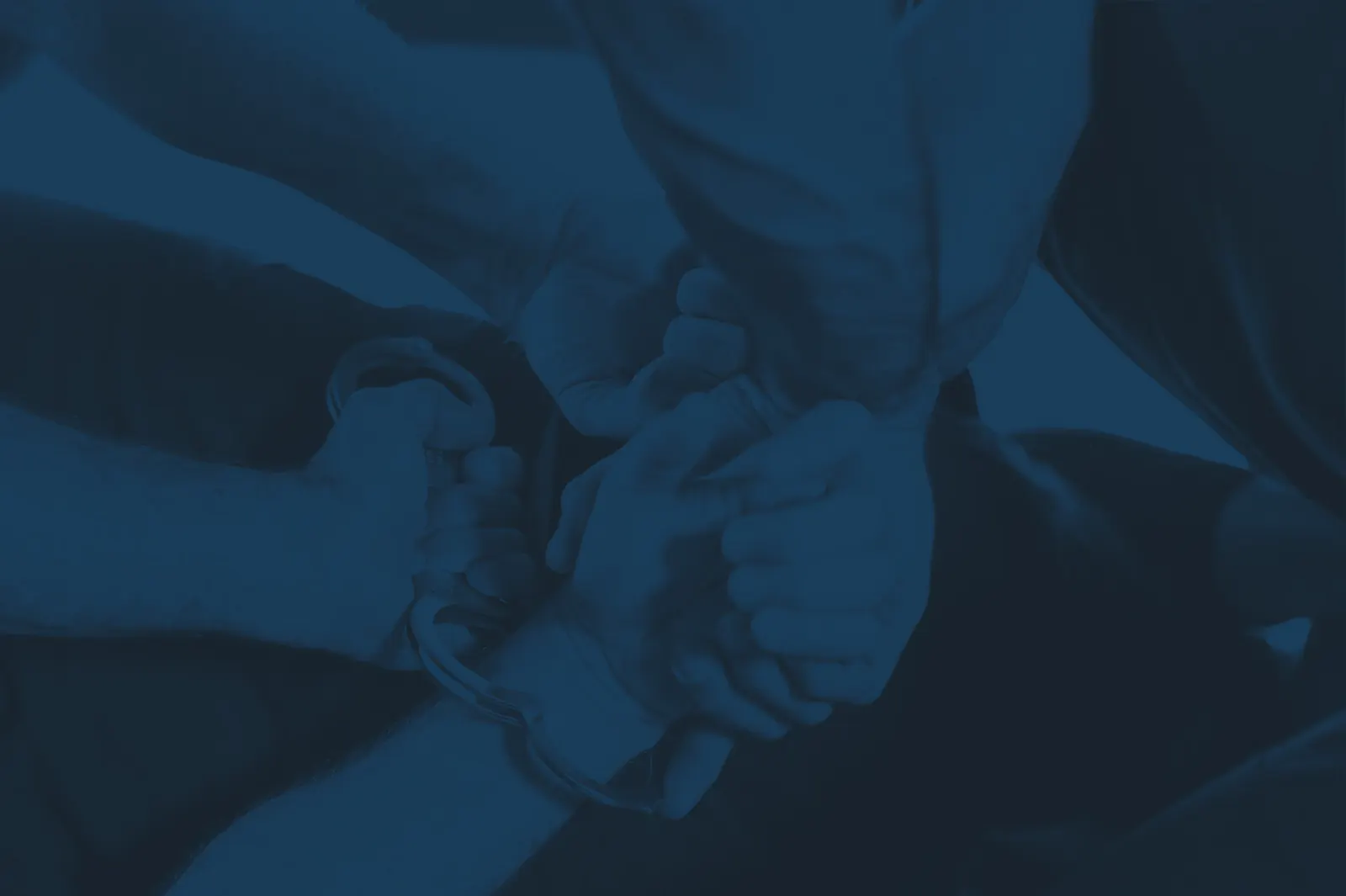
For police and other professionals who use handcuffs as part of their duties, SafeWrap includes a shared procedure for the controlled application of handcuffs from the lateral position. The set team roles and the cross-control of arms and legs help maintain control throughout handcuffing.
After handcuffing, SafeKeep provides a set structure for the controlled transition from team control to single-person control. Within that structure, one professional keeps the handcuffed person on their side, maintaining tactical control, personal contact, and continuous observation. This frees the second professional to carry out other necessary tasks.
SafeWrap helps organize physical control in a way that creates room for assessment and necessary medical care.
This may include, for example:
Physical restraint can have a profound impact on both the person being restrained and the professionals involved.
The Person's Perspective
Research on manual physical restraint describes a wide range of experiences, including fear, powerlessness, humiliation, and loss of trust-and sometimes also calm or a sense of safety when a person had lost control of their own actions.
The Professionals' Perspective
Among professionals, research describes experiences including fear, frustration, guilt, and tension between their caregiving role and the physical intervention.
Within SafeWrap, contact, clear explanation, dynamic de-escalation, and careful, gradual release are part of the physical intervention.
Collaboration Across Organizational Boundaries
SafeWrap gives professionals a recognizable operational language for physical intervention.
When immediate colleagues or professionals from other teams, disciplines, or organizations join in, that shared language helps them share observations, re-coordinate the division of roles, and bring each professional into the intervention within their own area of responsibility.
Terms for the phase of the intervention, switches, and release make communication shorter and more precise when the situation calls for it.
By training together regularly, professionals become increasingly familiar with the division of roles, communication between them, and the way their actions fit together. This builds a practiced approach they can fall back on in situations of acute tension.
The combination of certification, skills evaluation, and refresher training ensures the quality of the training process and supports careful, consistent application of SafeWrap within the organization.
SafeWrap is a proprietary system of Gracie University and is offered under license. Staff are trained by a SafeWrap instructor actively certified by Gracie University. The organizational license is tied to the official training standard and periodic refresher training.
Research, training, and evaluation of SafeWrap in U.S. practice.
Independent Research
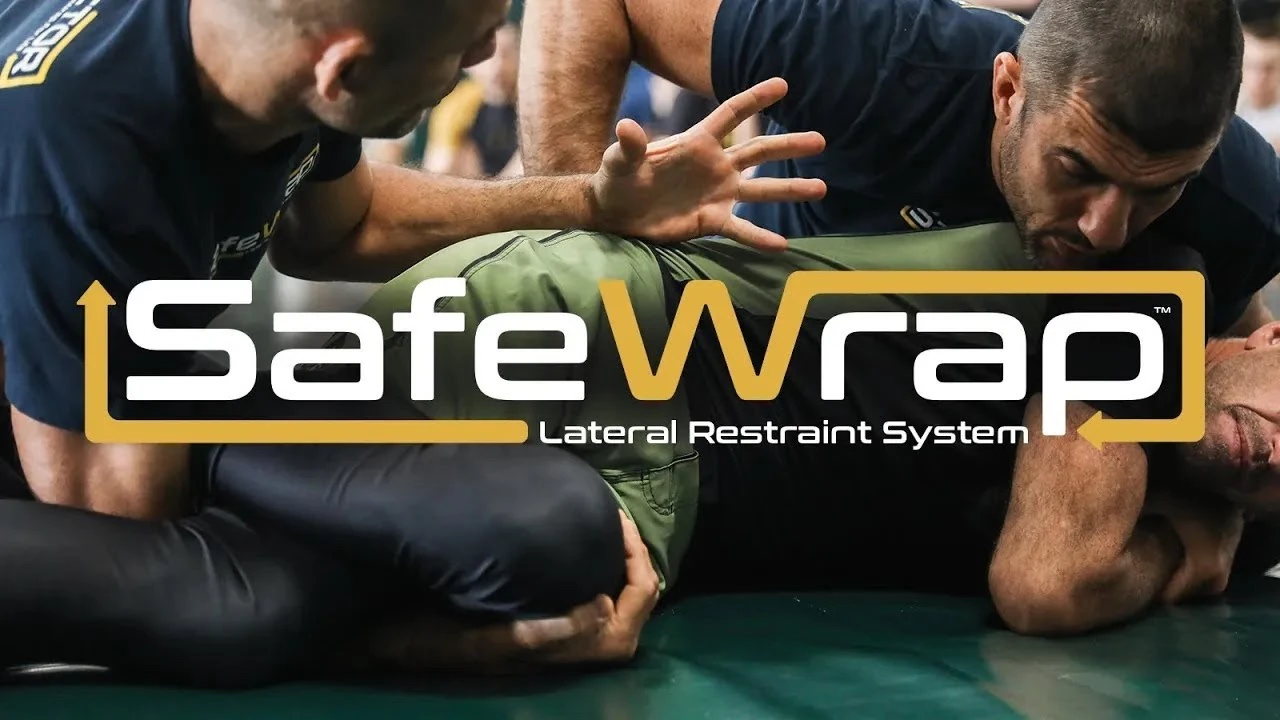
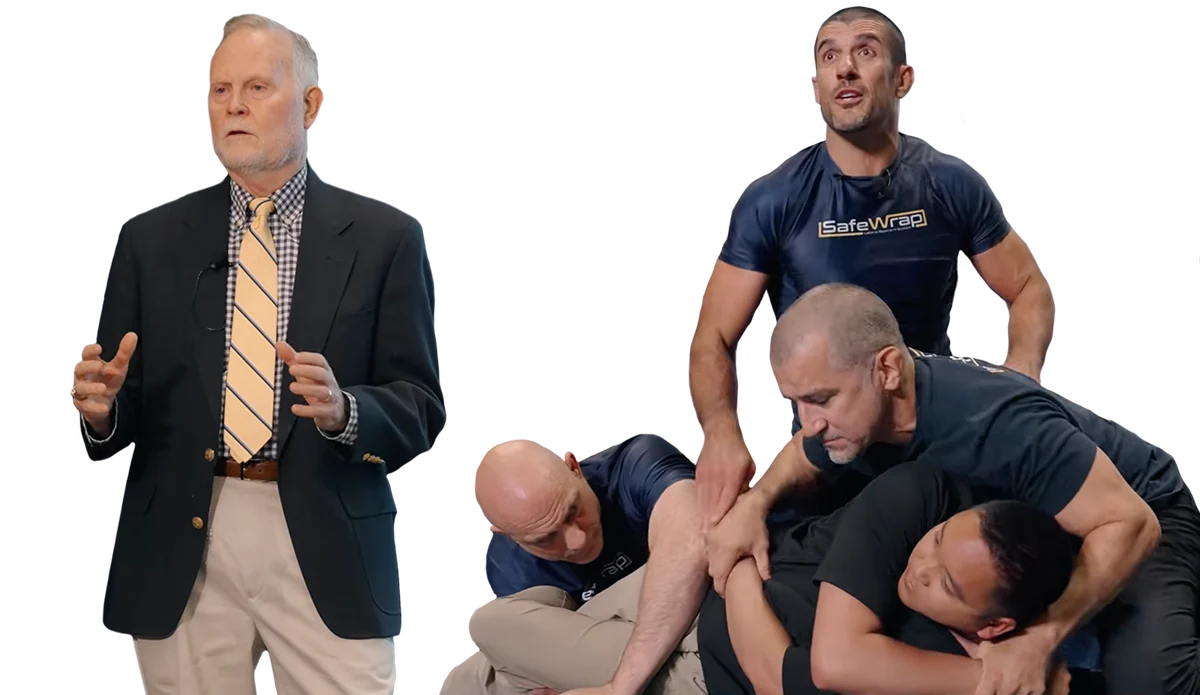
The presentation, which runs over an hour and a half, brings together research findings, substantive explanation, and an extensive practical demonstration.
The U.S.-based Institute for the Prevention of In-Custody Deaths (IPICD) is an independent educational and training organization in the field of arrest-related deaths and deaths in custody. In 2025, IPICD studied the first 130 documented field applications of SafeWrap.
John Peters, Ph.D., and Darrell Ross, Ph.D., present the findings at the annual conference of the California Force Instructors Association (CALFIA), a U.S. nonprofit focused on training and knowledge sharing on the use of force in law enforcement.
This is followed by an extensive demonstration of the principles, mechanics, and application of SafeWrap.
Together, the research findings and the demonstration challenge a long-held assumption: that the prone position is necessary to achieve maximum control over a physically resisting person.
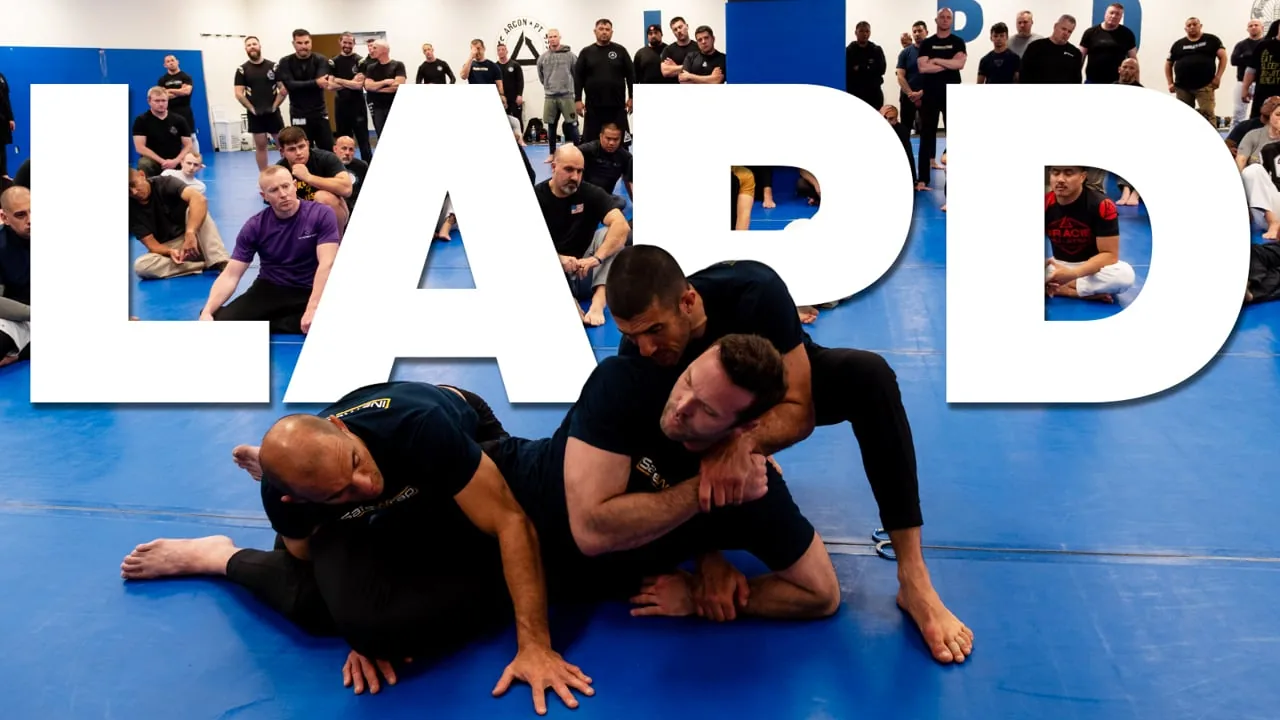 Training Experience
Instructors from the Los Angeles Police Department took part in an intensive train-the-trainer course to evaluate SafeWrap within their arrest and control tactics. In this video, they share their experiences with the system.
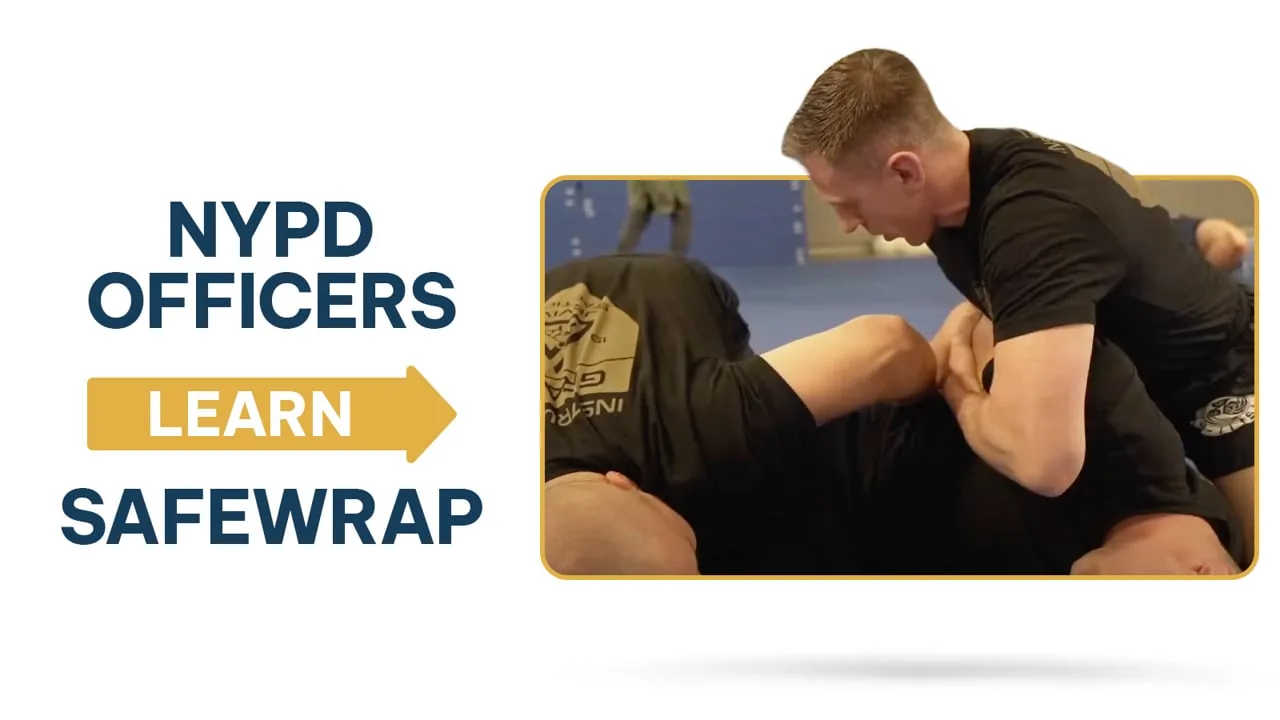 Training Experience
This video shows New York Police Department officers being introduced to SafeWrap and evaluating its practical application.
VIDEO LIBRARY
One system, two professionals: restraint without losing contact.
Discuss the options for a free demonstration within your organization.
A demonstration helps organizations assess whether SafeWrap fits within their existing safety policies, training, and crisis intervention frameworks.
Request a DemonstrationA demonstration is intended for organizations, team leaders, management, training coordinators, and professionals involved in physical crisis intervention.
Origin
International Adoption
SafeWrap was developed by Gracie University and is already successfully used in the United States across a range of professional settings, including healthcare, law enforcement, fire and EMS, and security.
For comprehensive information about the SafeWrap system, visit the official SafeWrap website.
Visit the official SafeWrap websiteTrain your own staff to teach SafeWrap to colleagues within your organization.
Discuss the optionsTeach SafeWrap to third-party organizations, independently of your own employer.
I want to become an instructorSafeWrap is taught by people who have been trained to do so. That can be done within your own organization, so that the knowledge stays in-house and new staff can be brought on board.
Want to know more? Ask us through the contact form and indicate in the Message field which of the two options you mean.
Frequently Asked Questions
SafeWrap is a practical, integrated system for physical crisis intervention. The system gives two trained professionals a clear approach for restraining a person from the lateral position-safely, in a controlled way, and proportionately-when safety is immediately at risk, without losing contact.
SafeWrap is not a general aggression management training or a standalone de-escalation program. The system focuses on physical crisis intervention: the moment escalation becomes physical. De-escalation remains an active part of the response: the team maintains contact, explains what is happening, and works to restore calm.
SafeWrap is intended for serious escalations in which safety is immediately at risk and physical intervention becomes necessary. The system fits within a careful, staged approach to escalation, in which contact, limit setting, verbal de-escalation, and team coordination come first.
Dynamic de-escalation means that de-escalation does not stop once physical intervention begins. During the intervention, the team maintains contact, explains what is happening and why, and works to restore calm and continue de-escalating.
Within SafeWrap, communication is part of the response. The system gives the team a clear approach, so that professionals can coordinate with one another and calmly explain what is happening, why physical intervention is taking place, and what the next step is. In this way, the team maintains contact with the patient or client as much as possible, even during the physical intervention.
SafeWrap emphasizes careful execution during physical intervention. Central to this are the lateral position, free breathing, avoiding pressure on the chest and diaphragm, and a clear view of facial expression, posture, and physical signs. The system is designed to keep pain, injury, and traumatic impact to a minimum.
No. SafeWrap is neither seclusion nor mechanical restraint. It is an integrated system for physical crisis intervention, with a set approach for bringing a person into the lateral position in a controlled way and carefully restraining them there.
In that respect, SafeWrap aligns with principles that are central under the Compulsory Mental Healthcare Act (Wvggz) and the Care and Compulsion Act (Wzd) for restrictive interventions: proportionality, necessity, effectiveness, safety, and due care. The decision as to whether physical intervention is appropriate and permitted always remains part of the care provider's professional and organizational framework.
SafeWrap was developed by Gracie University in the United States and is based on principles from Gracie Jiu-Jitsu, such as positional control and body mechanics. Those principles have been translated into professional physical crisis intervention in healthcare and public safety-not as a sport or a fighting system.
No. SafeWrap stems from the principles of Gracie Jiu-Jitsu, but it is not sports training and not a martial arts application. The system was developed for professional settings in which a person has to be physically restrained safely, in a controlled way, and proportionately.
The emphasis is not on winning, pain, or dominance, but on safety, team coordination, free breathing, maintaining contact, and careful execution when a crisis becomes physical.
SafeWrap does not replace protocols, professional decision-making, or legal frameworks. It can be used alongside existing systems and focuses on execution at the moment a crisis becomes physical. The organization remains responsible for assessing when physical intervention is appropriate and permitted.
SafeWrap is particularly relevant for organizations where professionals may face serious physical escalation, for example in mental health care, acute care, disability care, elder care, healthcare security, security, law enforcement, and crisis services. It can be used alongside existing methods, training programs, and safety protocols and does not need to replace them.
Yes. Organizations can request a demonstration or an introductory meeting, for example for management, trainers, or safety advisors. A demonstration gives insight into the approach, but it is not training and does not authorize you to use SafeWrap. Using SafeWrap in practice requires full training by a certified SafeWrap instructor, within the applicable license terms.
Contact
Want to find out whether SafeWrap could be relevant for your organization or team? Leave your details and we will get in touch to arrange an introductory meeting or demonstration.
We have received your message. We will contact you to discuss your questions and the next step you have in mind.
Sending failed.
Your details are still in the form. Try again, or email us directly at info@safewrap.nl.
Or copy your message and email it to us: